Technical SEO vs. On-Page SEO: What to Fix First
Short answer: Technical SEO makes a page reachable, crawlable, and understandable to search engines. On-page SEO makes the page the best answer for a searcher. Fix technical blockers first, then improve the page’s intent match, structure, and evidence. Doing more of one cannot compensate for a failure in the other.
Short answer: Technical SEO makes a page reachable, crawlable, and understandable to search engines. On-page SEO makes the page the best answer for a searcher. Fix technical blockers first, then improve the page’s intent match, structure, and evidence. Doing more of one cannot compensate for a failure in the other.
This guide gives you a practical order of operations for deciding what to fix first, without turning SEO into a checklist of changes that never reaches a user.
Technical SEO vs. on-page SEO at a glance
| Area | What it controls | Examples | First proof to check |
|---|---|---|---|
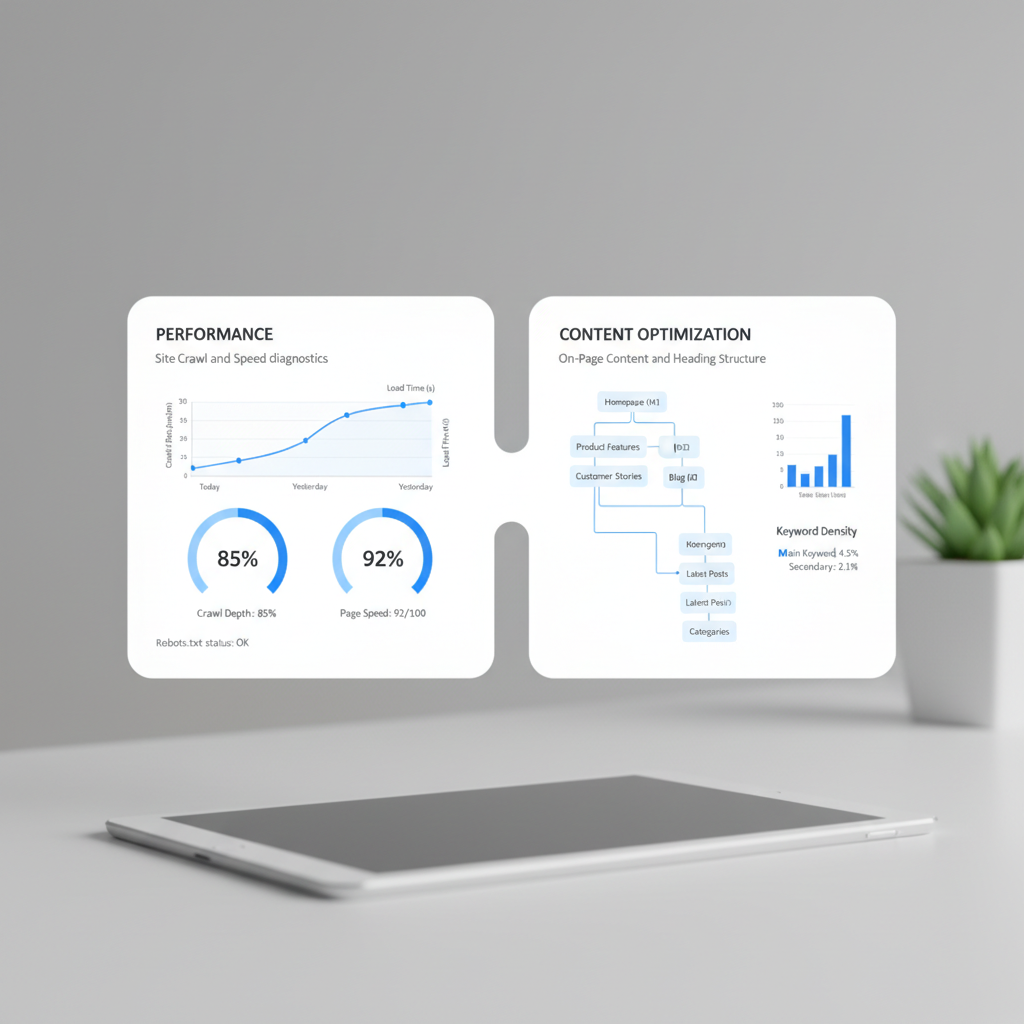
| Technical SEO | Whether search engines can access and interpret the URL | Status code, robots rules, noindex, canonical, sitemap, mobile performance | URL Inspection and a rendered crawl |
| On-page SEO | Whether the page satisfies the query better than alternatives | Search intent, title, headings, original examples, internal links, clear answer | Query/page data and a manual SERP review |
What technical SEO actually covers
Technical SEO is the access layer. Before asking whether an article is persuasive, confirm that a crawler can fetch it and that the page sends consistent signals about what should be indexed.
- Indexability: Check the HTTP response, robots.txt, meta robots, and whether the page is intentionally indexable.
- Canonical consistency: The canonical URL should point to the version you want indexed, and internal links should use that same URL.
- Discovery: Include important URLs in the right sitemap and link to them from relevant pages. A sitemap is a discovery hint, not an indexing guarantee.
- Rendering and mobile behavior: Test the page as a user and as a crawler. Important text and links should not depend on a broken client-side interaction.
- Duplication and redirects: Consolidate genuinely duplicate URLs, but do not merge pages that serve different intents just to reduce the URL count.
Google’s crawling and indexing documentation is the primary reference for these checks. Treat third-party scores as triage, not as proof that a page is indexed.
What on-page SEO actually covers
On-page SEO is the answer layer. It starts with the query a page is already earning impressions for, not with a list of phrases you wish it ranked for.
- Match the intent: Decide whether the searcher needs a definition, comparison, workflow, calculator, template, or product.
- Answer early: Put a plain-language answer near the top, then explain the reasoning and edge cases.
- Show the work: Add a reproducible process, example, export, screenshot, or calculation that makes the page more useful than a generic summary.
- Structure for scanning: Use descriptive headings, short sections, tables where they clarify a choice, and links to the next action.
- Earn the click honestly: Align the title and description with the page’s actual promise. Do not use a keyword in the title and answer a different question in the body.
What to fix first: a five-step workflow
- Start with the URL: Confirm 200 status, canonical, robots, sitemap presence, and that the page is not accidentally noindexed.
- Choose one query and one page: In Search Console, find query/page pairs with impressions but weak position or CTR. Do not create a second URL until the existing page has been tested.
- Compare the search intent: Review the current results and write down the format, depth, proof, and next action they provide. Use this as a gap list, not as an invitation to copy them.
- Revise the answer: Put the direct answer first, add the missing workflow or example, and remove sections that do not help the query.
- Measure the same window: Record impressions, clicks, position, and conversions before the revision, then review after Google has had time to recrawl the URL.
A simple example
Suppose an article receives impressions for “technical SEO vs on-page SEO” but sits below the first page. A technical audit might find no blocker at all. The stronger revision is then an explicit comparison table, a decision sequence, and an example showing when a canonical or noindex issue takes priority over rewriting a paragraph. That is an on-page improvement informed by technical evidence.
Conversely, rewriting the article will not help if the production URL redirects unexpectedly, is blocked by robots rules, or has a canonical pointing to another page. Diagnose the access layer before spending another editorial cycle.
Use Seobase for the handoff from diagnosis to page work
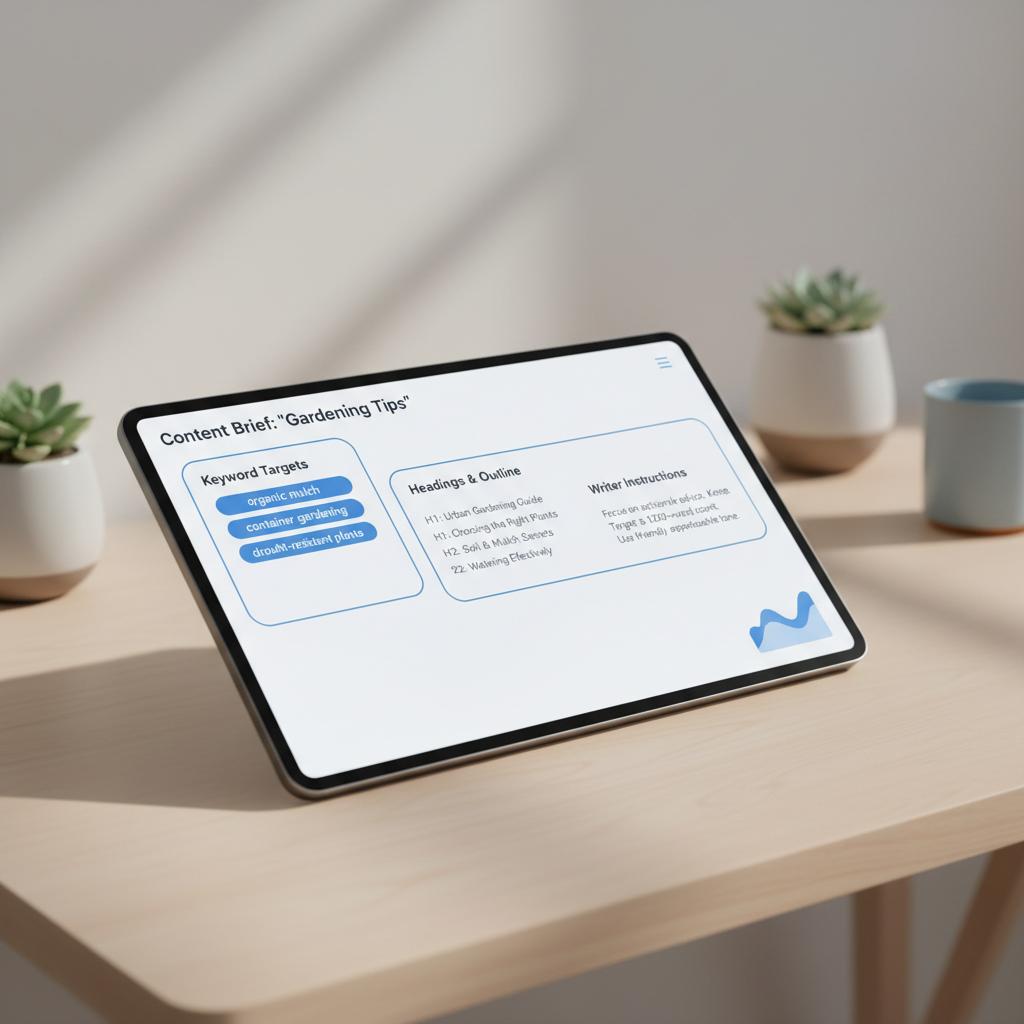
Use the free SEO checker to turn a URL review into a short list of technical and on-page checks. Then use the content brief generator to map the target query, sections, evidence, and internal links before editing. The goal is one measured page improvement, not a larger publishing queue.
Which free Seobase tool should you use?
Match the tool to the blocker you found: use the international SEO audit for localized HTML, hreflang, and canonical signals; the hreflang generator to create reciprocal link or sitemap markup; and the canonical URL checker for one page’s canonical markup; and the search engine listing preview for the title and description shown before you publish. Each tool checks a specific input, so keep the result as evidence for the page revision rather than treating it as a ranking score.
Limits worth keeping in mind
- A technically clean page can still lose because the answer is generic, the intent is wrong, or the site lacks authority.
- A strong article can still remain unindexed because access, canonical, or quality signals are unresolved.
- Search Console positions are averages across impressions; verify meaningful movement over comparable windows.
- No audit tool can promise a ranking change. It can only make the next change more specific and testable.
FAQ
Is technical SEO more important than on-page SEO?
Neither wins universally. Technical SEO is a prerequisite when it blocks crawling or indexing; once the URL is accessible, on-page usefulness and intent match determine whether the content deserves to move.
Should I fix technical SEO or content first?
Check for technical blockers first. If the URL is indexable and already earns impressions, prioritize the content and SERP promise before starting a broad technical project.
Can on-page SEO fix a slow website?
No. Improve the content and performance separately, then measure the combined page experience. A better paragraph does not repair a failed response, blocked resource, or incorrect canonical.
Next step: Pick one page already earning impressions, run the five checks above, and record the before state before you change it.
Put this on autopilot
Seobase runs the whole loop for you: it finds the keywords worth ranking for, writes and publishes the articles, and reports back from Search Console on what actually moved.
Start a free Seobase workflow