Data-driven internal linking: map site architecture
Data-driven internal linking uses crawl depth, user behavior, and network graph analysis to optimize how search engines and users navigate your website. Instead of guessing link placements, this quantitative method routes authority directly to high-value pages using empirical performance metrics.

Manual link placement often hides deep content from crawlers and users. Transitioning to algorithmic mapping ensures your site structure enhances indexation and crawl efficiency. If you need a comprehensive setup before auditing your site, grab this SEO strategy template to organize your foundation. Here is how to rebuild your internal architecture using concrete data.
TL;DR: Data-driven internal linking replaces guesswork with metrics like click depth and network graph analysis. By auditing link equity flow, fixing orphan pages, and limiting links to 1-5 per thousand words, you maximize crawl efficiency and boost site authority.
Mathematical modeling with network graph analysis
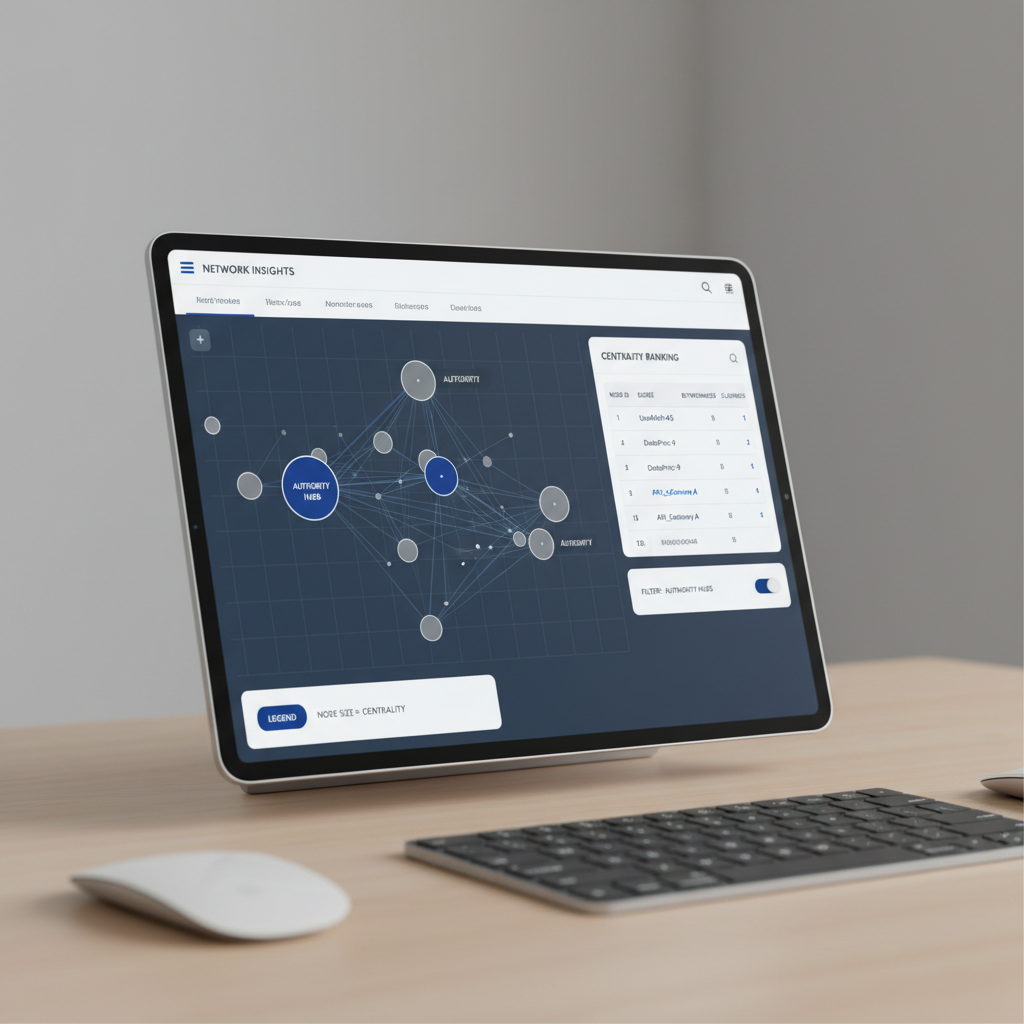
Network graph analysis treats a website as a directed graph where each URL serves as a node and every hyperlink functions as a directed edge. This mathematical approach helps you measure how modeled authority circulates across your entire site structure.
You can use the open-source NetworkX library in Python to calculate a directed PageRank vector matrix for your architecture:
import networkx as nx

# Initialize directed graph
graph = nx.DiGraph()

# Add directional internal links (source, target)
graph.add_edges_from([
    ("Home", "Guide"),
    ("Home", "Product"),
    ("Guide", "Product"),
    ("Product", "Contact"),
])

# Compute modeled authority distribution
scores = nx.pagerank(graph, alpha=0.85)
print(scores)
The script outputs a page-level distribution of internal link equity. When the Product URL receives inbound links from both Home and Guide, its score increases accordingly.
This model serves as a practical diagnostic tool rather than a clone of Google’s ranking algorithms. It highlights whether your linking architecture successfully routes authority to your primary commercial assets.
Finding authority hubs with Centrality
In-degree centrality calculates the exact number of incoming internal links pointing to a node. It identifies primary hub pages like category landing pages, core service pages, and comprehensive pillar guides.
+------------------------+-------------------------------------------------------+
| Metric                 | Analytical Purpose                                    |
+------------------------+-------------------------------------------------------+
| In-Degree Centrality   | Measures total volume of incoming internal links.     |
| PageRank Vector        | Evaluates weighted authority flow across paths.       |
| Business Value Score   | Prioritizes URLs by conversion and revenue impact.    |
+------------------------+-------------------------------------------------------+
A URL can have high in-degree centrality but a low PageRank score if its inbound links originate from isolated or weak subpages. This discrepancy flags links placed purely for volume rather than structural equity.
Combine graph data with your analytics exports and other ways to connect your SEO data. Map organic visits, conversion rates, and anchor text alongside your graph scores to spot high-value commercial pages suffering from weak structural support.
Technical Limitations: Network graph scripts require clean crawl data or server logs. If your dataset excludes client-side JavaScript links, URL parameters, or canonical redirects, the resulting authority model will produce inaccurate calculations.
Analyzing website traffic and user behavior
Behavioral metrics pinpoint where strategic internal links directly assist conversion goals. Inspect high-traffic entry pages to identify the specific exit points where visitors abandon journeys before completing target actions.
If an informational guide generates high search traffic but zero assisted conversions, check its exit rate, engaged session duration, and scroll depth. Adding a contextual link from that guide to a relevant pricing page provides qualified readers with an immediate conversion path.
[ Informational Guide ] ---> ( Contextual Link ) ---> [ High-Intent Pricing Page ]
Avoid evaluating performance through single metrics. Broad informational queries often drive traffic without direct intent. Low-traffic technical pages may still deliver superior value by generating demo requests and qualified sales leads.
Locating conversion drop-off points
User path reports highlight structural gaps that aggregate traffic totals obscure. Track landing-page navigation paths, exit rates, form abandonments, and click events on primary calls to action.
Consider a user who reads an evaluation guide and leaves the site immediately. The content solved their initial question but offered no path to an implementation checklist or product comparison. Placing a contextual link at this decision stage keeps qualified users within your funnel.
Evaluate search intent alignment before adding links. Visitors reading beginner documentation rarely click direct sales links; they engage better with workflow examples, definitions, or technical teardowns. Match the link destination to the user’s logical next step.
Clustering related topics with Semantic models
Semantic vector embeddings group related pages based on topical meaning rather than exact keyword overlap. A guide covering payment checkout optimization naturally clusters with content addressing cart abandonment and gateway errors.
Topical Cluster: Checkout Optimization
├── Primary Node: Payment Flow Friction
└── Supporting Nodes:
    ├── Cart Abandonment Audits
    ├── Gateway Error Resolution
    └── Mobile Checkout UX
Use semantic clustering to build a shortlist of link opportunities, but review every placement manually. Write descriptive anchor text that sets clear expectations, using phrases like “resolve payment gateway errors” instead of generic labels like “learn more.”
Data Limitations: Tracking gaps, consent banner rejections, and bot traffic can distort behavioral data. High exit rates do not always signal poor content; users often leave simply because they found their answer immediately.
Quantitative link audits and structural bottlenecks

Resolving orphan pages
Begin your audit with a full crawl export containing all URLs, internal link counts, HTTP status codes, canonical tags, and crawl depth values. Filter for pages with zero inbound internal links to identify orphan pages.
Site Audit Checklist:
1. Identify 0-inlink URLs in crawl exports.
2. Verify HTTP response codes (resolve 3xx/4xx targets).
3. Validate canonical tag alignment.
4. Replace multi-hop redirect chains with final destinations.
Evaluate whether each orphan URL delivers commercial value or organic traffic. If a dormant page covers an active topic, link to it from an authoritative category hub. If the content is outdated or redundant, consolidate or prune it.
Remove multi-hop redirect chains during your audit. Links pointing through multiple 301 redirects waste crawl budget and dilute link equity. Update all internal links to point directly to the final 200 OK destination, and remove rel="nofollow" attributes from valid internal paths.
Do not use schema markup tools as a replacement for structural link audits. If structured data requires review following your crawl updates, validate your markup using this free Schema Markup Generator.
Optimizing click depth
Group your URLs by click depth from the homepage. A critical product page sitting at depth 4 with strong search demand requires structural elevation.
Before: [ Homepage ] -> [ Category ] -> [ Sub-Category ] -> [ Topic ] -> [ Target Page (Depth 4) ]
After:  [ Category (Depth 1) ] -----------------------------------------> [ Target Page (Depth 2) ]
According to link architecture research by LinkStorm, linking an authoritative page at depth 1 directly to a buried page at depth 4 trims the target page’s click depth from 4 to 2. This provides search engine crawlers with an efficient indexing route.
Audit Limitations: Crawling large enterprise domains with faceted navigation consumes substantial bandwidth and memory. Run crawls in partitioned subdirectories and compare normalized snapshots before and after structural changes.
Building a quantitative internal linking strategy
Applying link density limits
Establish precise link volume parameters across your content assets:
- Target 1 to 5 relevant internal links per 1,000 words, as outlined by LinkStorm. A 2,000-word guide accommodates 2 to 10 contextual links.
- For concise landing pages or conversion templates, research from Internal Link Juicer suggests a strict maximum of 3 internal links per page to minimize click distraction.
Target Ratio: 1-5 contextual links per 1,000 words
Follow a structured implementation workflow:
- Identify the primary subject and supporting entities of the source page.
- Insert contextual links to relevant pages within the same topic cluster.
- Remove redundant links pointing to duplicate URLs within the same passage.
- Record baseline inlink counts in your site architecture spreadsheet.
Monitor internal link velocity across publishing cycles. Sudden spikes from uncontrolled script automation can create low-quality navigation blocks. Incremental, audited additions maintain link equity distribution safely.
Diversifying anchor text distribution
Conduct keyword research before writing anchor text. Identify terms users search for when seeking the target URL, and integrate those phrases naturally into body copy.
For a technical audit guide, distribute anchors across varied phrases such as “technical SEO audit,” “crawl bottleneck checklist,” and “evaluate site architecture.”
Anchor Distribution Profile:
- 50% Descriptive / Partial-Match Phrases
- 30% Exact-Match Target Keywords
- 20% Entity / Brand Variations
Avoid using identical exact-match anchor text across every inbound link. Search engines may flag repetitive phrasing as manipulative. Varied, descriptive anchors help readers and crawlers understand contextual relevance without over-optimization risks.
Automating internal linking workflows with Seobase
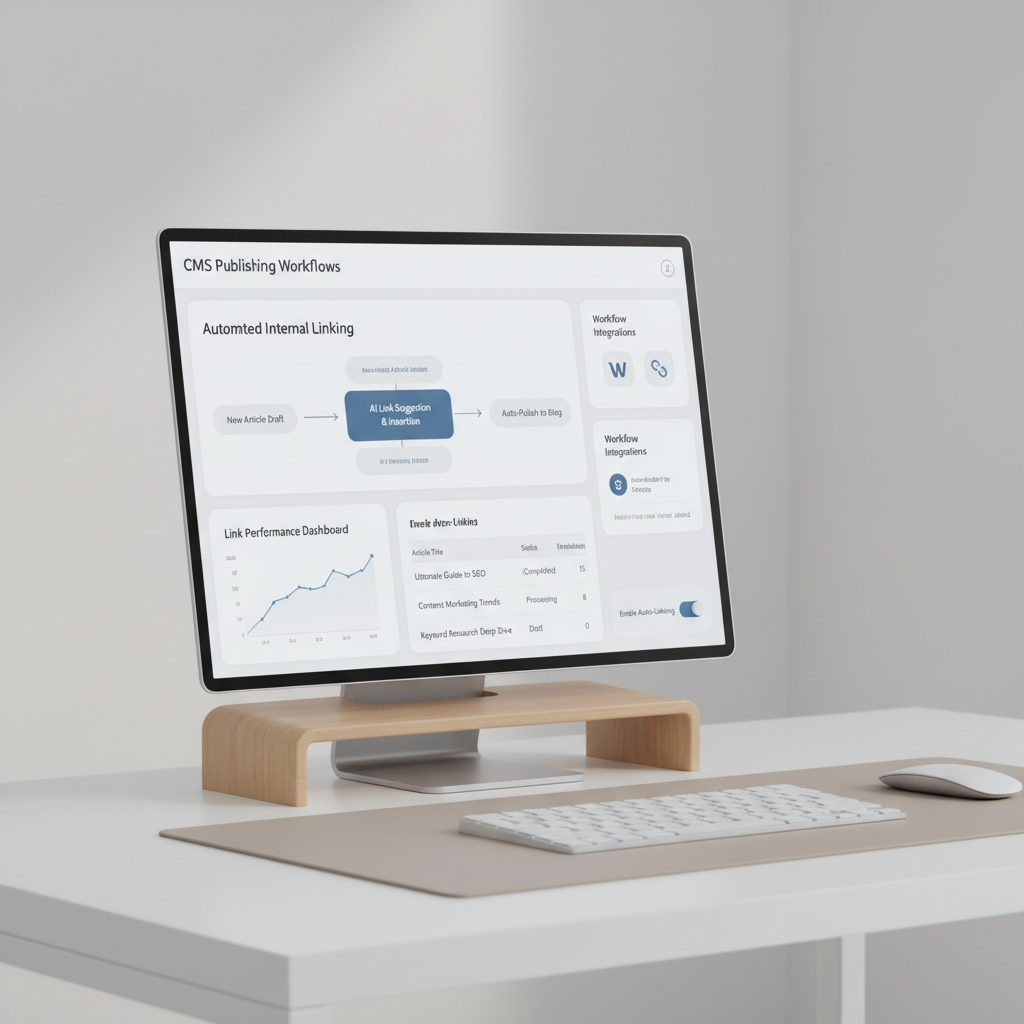
Seobase streamlines data-driven internal linking by identifying keyword targets, matching them against indexable assets, and inserting links during content production.
Manual internal link mapping introduces operational bottlenecks. Content teams often forget existing relevant URLs when publishing new articles. For example, writers producing content about running gear may miss opportunities to link to an established trail shoe sizing guide.
Seobase matches text entities in active drafts against your indexed inventory. The platform supports automated keyword research and AI article generation, placing contextual internal links during drafting rather than during post-publish updates.
[ New Draft Content ] ---> ( Seobase Semantic Engine ) ---> [ Links to Existing Site URLs ]
This structural connection benefits expanding websites. New content instantly routes authority to existing service pages, while automated workflows link older catalog articles back to fresh assets.
Cms publishing workflows
Seobase integrates directly with WordPress, Webflow, and Ghost. You can send reviewed content through native publishing pipelines without manual copying between separate document tools.
+-------------------------------------------------------------------------+
| Integrated Publishing Architecture                                      |
|                                                                         |
|  [ Seobase Engine ]  --->  [ Link Validation ]  --->  [ Target CMS ]    |
|  - Keyword Discovery       - Anchor Control           - WordPress       |
|  - Content Drafting        - Target Mapping           - Webflow / Ghost |
+-------------------------------------------------------------------------+
Centralizing this workflow eliminates broken links and incorrect anchor tags. Writers confirm link targets and anchor variations within the editor before publication.
Automation Guardrails: Algorithmic link placement requires editorial oversight. Automated systems may occasionally suggest syntactically valid links that disrupt reading flow. Editors must verify contextual fit and page intent before final publication.
Managing scaled site architecture
Quantitative internal linking replaces subjective assumptions with verified crawl models. Instead of guessing link placements, you route authority based on measured crawl depth and network metrics. Seobase surfaces these structural opportunities to help you build clean linking pathways.
Structural priorities
- Eliminate orphan pages and keep core URLs within 3 clicks of the root domain.
- Shorten paths by linking depth 1 hubs directly to depth 4 target URLs.
- Limit link density to 1 to 5 contextual links per 1,000 words.
- Maintain natural anchor text variation across all inbound paths.
Open your site crawler today, export all URLs with a click depth greater than 4, and map direct links from authoritative category pages to bring critical content closer to the surface.
Frequently asked questions
What is data-driven internal linking?
It is the practice of optimizing internal hyperlinks using crawl depth, network graph metrics, and user behavior data. This quantitative approach routes link equity efficiently across indexable pages.
How does click depth affect SEO?
Click depth measures the number of clicks required to reach a URL from the homepage. Keeping depth low ensures search engine crawlers discover, render, and index important pages efficiently.
What is the scale-down approach in internal linking?
A structural method where authoritative, top-tier pages link directly to deeper, underperforming content to pass link equity and elevate crawl priority.
How many internal links should a page have?
Industry data from LinkStorm recommends 1 to 5 relevant internal links per 1,000 words. For compact landing pages, guidelines from Internal Link Juicer suggest capping links at 3 to prevent conversion dilution.
Which tools analyze internal linking data?
Teams use tools like Screaming Frog, Google Search Console, Google Analytics, and platforms like Seobase to audit click depth, track keyword targets, and manage automated link placement.
How do internal links pass PageRank?
Internal links pass authority through standard HTML hyperlinks. Broken URLs, 301 redirect chains, and internal rel="nofollow" attributes interrupt this flow and waste link equity.
What are common internal link bottlenecks?
Frequent bottlenecks include orphan pages, redirect loops, broken 404 targets, excessive click depth beyond 4 hops, and repetitive exact-match anchor text profiles.
How do you diversify anchor text safely?
Distribute anchors naturally across partial-match descriptions, target keywords, and topical phrases. Avoid using identical commercial text across all inbound internal links.
Put this on autopilot
Seobase runs the whole loop for you: it finds the keywords worth ranking for, writes and publishes the articles, and reports back from Search Console on what actually moved.
Start a free Seobase workflowIn this guide
- Mathematical modeling with network graph analysis
- Analyzing website traffic and user behavior
- Quantitative link audits and structural bottlenecks
- Building a quantitative internal linking strategy
- Automating internal linking workflows with Seobase
- Managing scaled site architecture
- Frequently asked questions