Semantic SEO automation in 2026: tools, workflows, and real results
Semantic SEO automation uses AI to optimize content for meaning and search intent, not just keywords. This approach saves time, builds topical authority, and delivers intelligent internal linking, so your content structure benefits both users and search engines. If you want content that ranks, you need more than basic keyword research and analytics.
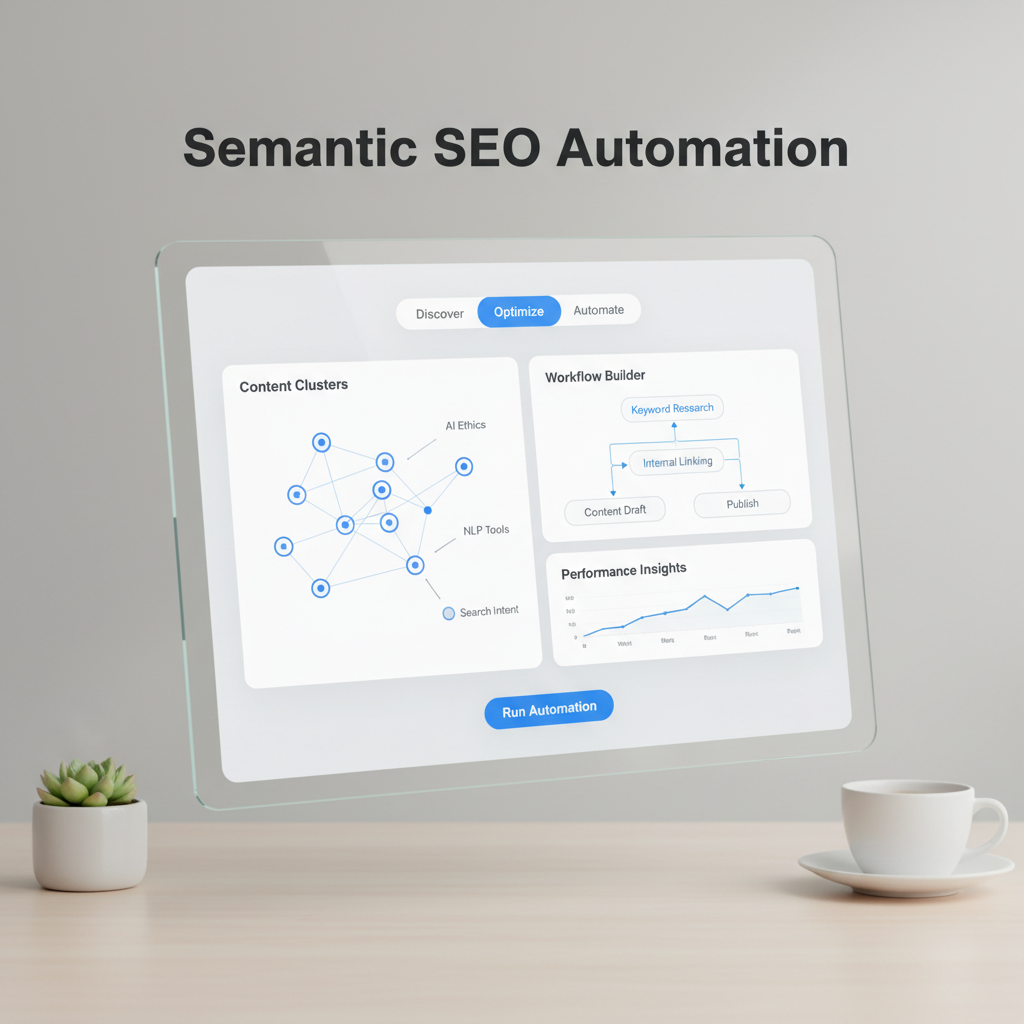
This guide covers the best tools, how SaaS CMOs and content teams integrate automation, and what real results look like. You’ll see free trial options, workflow examples, and the impact on keyword research and publishing speed.
How semantic SEO automation transforms search strategy
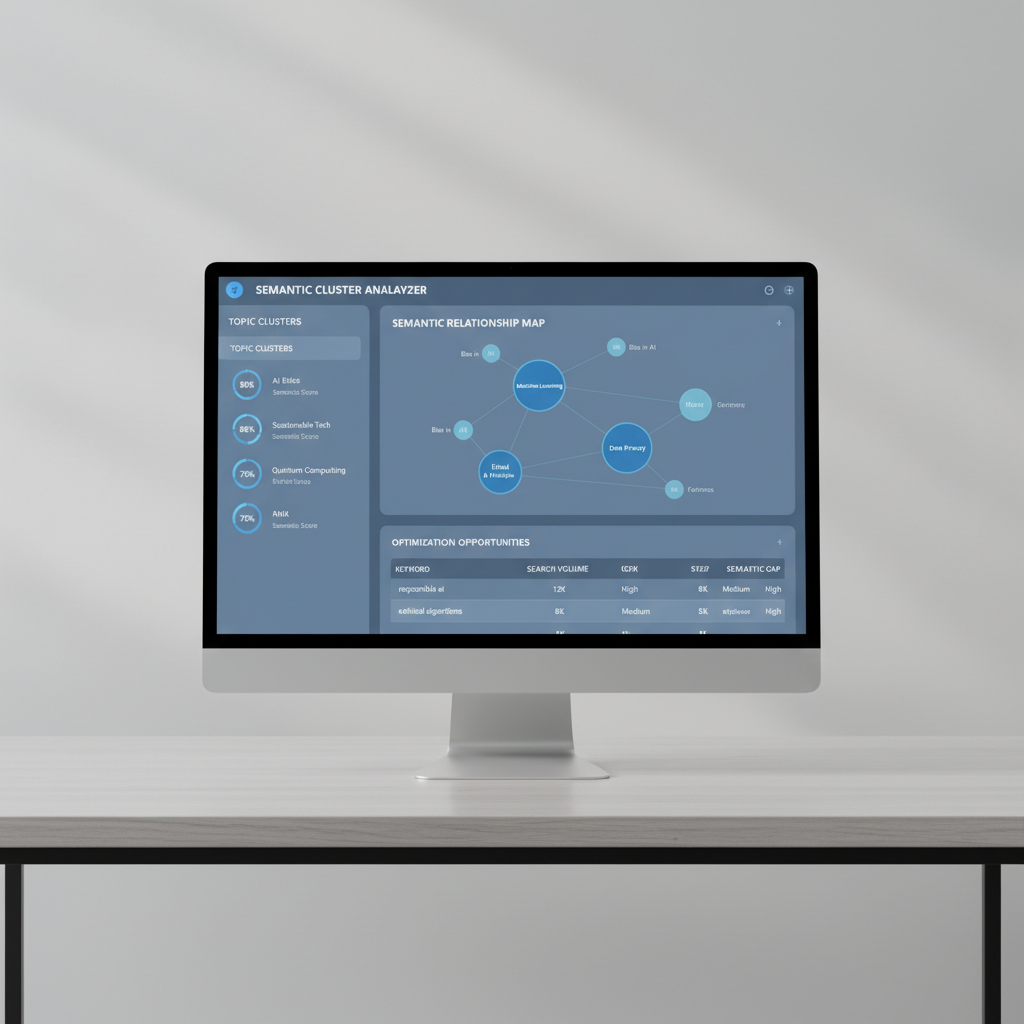
Semantic SEO automation shifts your strategy from chasing keywords to mapping meaning. Instead of matching words, you align content with user intent by analyzing context, entities, and topic relationships. This lets you address what people actually want when they search.
Automation tools extract entities (such as product features or industry terms) from your site and competitors, then connect those using semantic triples. For example, a tool might map “free trial options” as an entity, link it to “SaaS CMOs” and “product-led growth,” and identify which pages should reference each other. The result: internal links that build topical authority and surface the right content at the right time.
You also get auto-generated schema markup. Instead of marking up every page by hand, scripts add structured data that helps Google understand your topics, FAQs, and reviews. For large sites, this can cut schema deployment from days to hours.
Three pillars define this approach:
- Entity mapping: Tools identify key concepts and relationships, so your content covers the full topic, not just a keyword.
- Internal linking optimization: Automation suggests or inserts links based on topic clusters, keeping users and search engines on the right path.
- Schema markup generation: Scripts add structured data at scale, increasing the chance for rich results.
SERP analysis becomes more actionable. Automation surfaces which entities competitors rank for, where your coverage overlaps, and what gaps remain.
Manual keyword research still matters, but semantic SEO automation lets you move faster. The process shifts from “what keyword should I target?” to “how do I own this topic?” For more on connecting search demand to growth, see How Free SEO Tools Turn Search Demand Into Product-Led Growth | Seobase.
Leading tools for automating semantic SEO tasks
Automating semantic SEO now means more than keyword stuffing or surface-level optimization. The leading tools handle entity mapping, internal linking, and even full content creation with a focus on matching search intent.
InLinks excels at entity mapping and schema automation. It scans your site, identifies key topics, and generates schema markup that search engines pick up quickly. For example, InLinks can automatically add schema for a new “Product” page, so Google recognizes your offer within hours. The platform also suggests internal links based on semantic relationships, reducing manual work for large sites.
Seobase integrates keyword research, content generation, and direct CMS publishing. You can find a high-value keyword, generate a draft that aligns with semantic SEO principles, and publish straight to WordPress without leaving the dashboard. The workflow is unified: research, optimize, and publish in one place. For more, see AI SEO Automation: How to Build a Search Engine That Compounds | Seobase.
MarketMuse and Surfer SEO are strong in content optimization and analytics. MarketMuse gives you a content score based on topic coverage, helping you identify gaps before publishing. Surfer SEO analyzes top-ranking pages for a keyword and suggests changes to your copy, headings, and structure so your content matches or exceeds competitors. Both platforms support batch reports, which saves time for agencies managing multiple sites.
If you want automation that covers the full workflow, from keyword research to entity mapping to publish-ready content, Seobase is a practical choice. For fine-tuning and analytics, MarketMuse and Surfer SEO lead. InLinks is the clear pick for schema and internal linking at scale. Choose the tool that fits your bottleneck.
Step-by-step: automating semantic SEO from keyword to publish
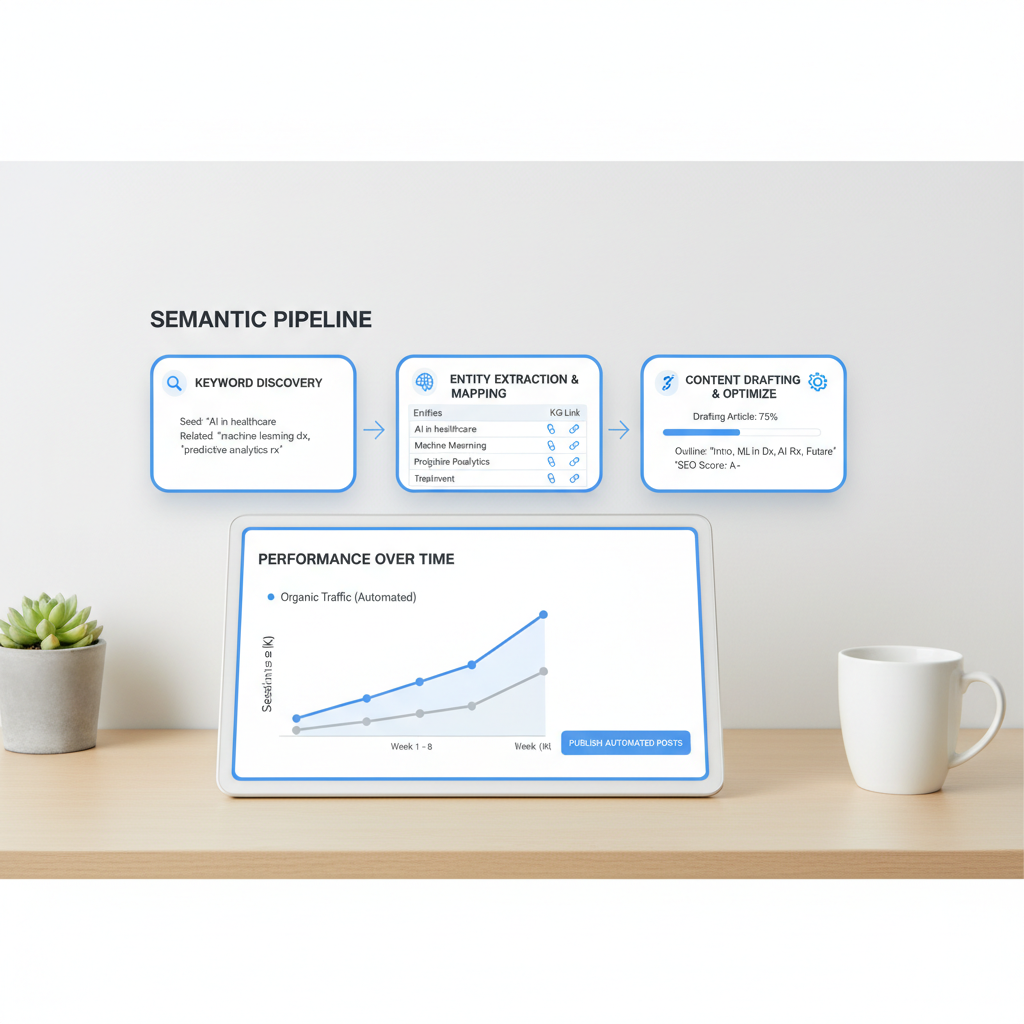
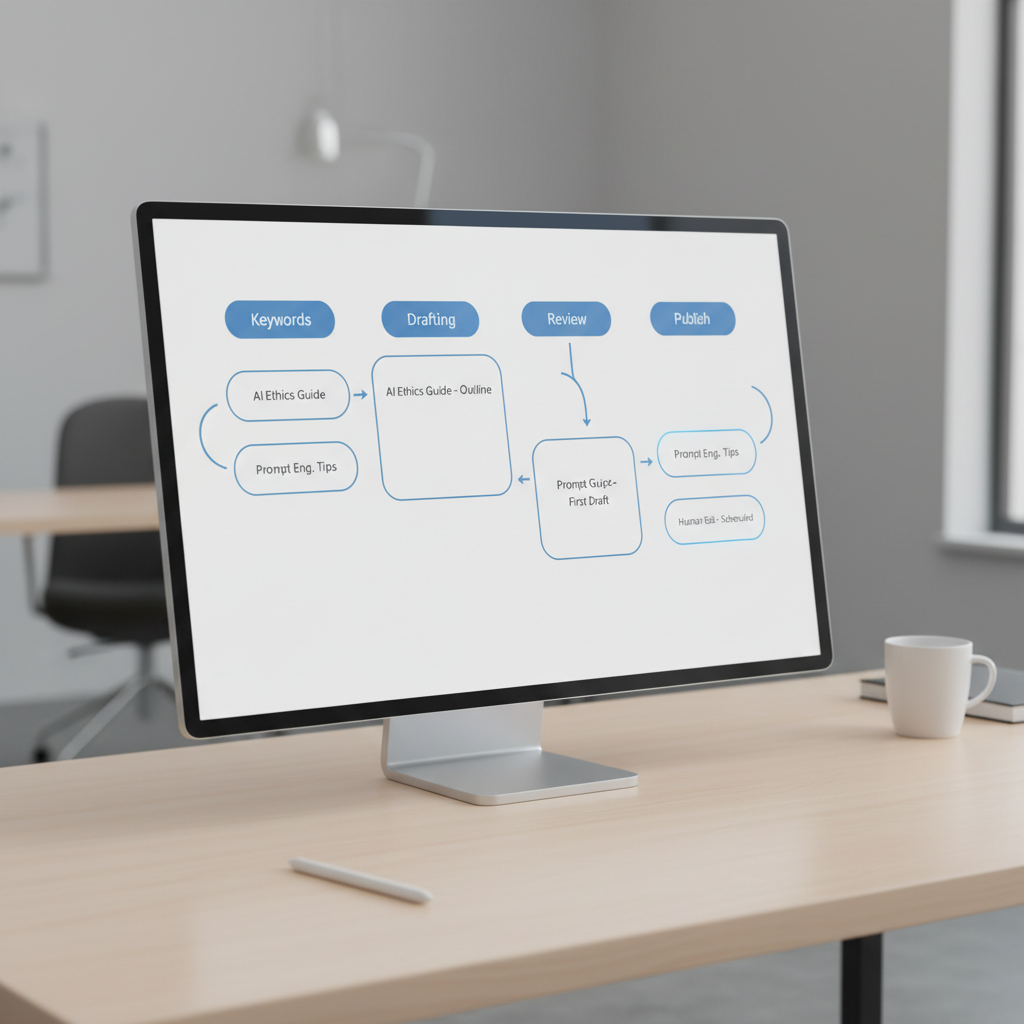
Start with a keyword research topic using an AI-assisted tool like Surfer SEO. Enter your main keyword, and the tool generates a cluster of related terms, intent categories, and topical gaps. This sets your semantic map, so you target what people actually search for.
Next, automate your content brief. Most AI platforms let you export a structured outline with headings, entity suggestions, and sample questions, pulling in entities from a knowledge graph so the outline covers a topic rather than a single phrase. You get a clear list: target entities, must-include subtopics, and suggested internal links.
Automate internal linking by integrating tools like LinkWhisper (for WordPress) or InLinks. These scan your published content, then auto-generate anchor text and insert links across relevant articles. You cover semantic relationships and boost topical authority without manual effort.
Connect your workflow to your CMS. Platforms like WordPress, Webflow, and Shopify support direct API publishing from most AI content tools. With the right setup, you can go from brief to publish with a single click.
Enable content audit automation to keep pages optimized. Tools like Surfer Audit or Ahrefs Site Audit crawl your site, flag outdated pages, and suggest fresh internal links or new entities to add. Schedule these audits to run weekly.
This workflow lets SaaS CMOs and content teams scale up semantic SEO without bottlenecks. Automation covers research, drafting, linking, and auditing, so you spend time on strategy, not grunt work — but every step above still needs a human checking that the automated brief and the automated links actually make sense together before anything publishes.
Maintaining quality and brand voice in automated content
Human review is non-negotiable if you want your automated content to sound like your brand. AI-generated drafts can speed up production, but only a real editor will spot when an article slips into a bland, off-brand tone or gets facts wrong. For example, a SaaS CMO might use an AI tool to draft blog posts, but a content strategist polishes the piece to match the company’s voice, whether that’s technical, friendly, or direct.
Automation tools can help optimize for natural, conversational queries, but they often miss the nuance of your unique style. Conversational query optimization means tuning content so it answers real user questions in the way people actually search. If you let the robot write unchecked, you risk serving up generic, keyword-stuffed paragraphs that turn off readers and fail to connect with your audience.
Automated content must pass two more tests before publishing: schema markup and EEAT (Experience, Expertise, Authoritativeness, Trustworthiness). Schema ensures search engines understand your content’s structure, while EEAT checks confirm your article has a credible author, cites trustworthy sources, and reflects real expertise. Skipping these steps can mean your pages rank lower, even if your keyword research and analytics say the topic is strong.
Over-automation creates problems fast. You might see more errors, repetition, or shallow coverage. The biggest risk: your brand voice disappears, and everything starts to sound like everyone else. That’s a fast way to lose trust.
To keep quality high, layer automation with focused human review. Build a checklist: does the piece match your brand voice? Does it answer the user’s search intent? Are internal links relevant? Did the system follow the semantic SEO topic structure, or does it drift? Free trial options for most AI content tools let you test this workflow before committing. Always measure output quality before scaling.
How to know if it’s working: watch Search Console, not vendor claims
Vendor case studies for SEO tools are notoriously hard to verify independently — the sample size is one site, the baseline is rarely published, and “traffic went up” says nothing about whether the tool caused it or the site would have grown anyway. Rather than take a tool’s own success story at face value, track your own before/after: pull the same query and page rows from Search Console for a complete window before you change your workflow, make one change (switch to entity-based internal linking, say, or add schema automation), then compare the next equal window.
The pattern worth watching for is topical authority compounding: as entity coverage and internal linking depth increase across a content cluster, individual pages that previously ranked nowhere often start appearing for mid-tail queries adjacent to their main topic — that’s the signal semantic SEO automation is actually supposed to produce, and it shows up in your own Search Console data, not in a screenshot from a vendor’s landing page.
How Seobase powers end-to-end semantic SEO automation
Seobase handles every major step of semantic SEO, from keyword research to live publishing, with automation that saves hours per week. You get a single platform that connects keyword analytics, content planning, and article production, no more juggling multiple tools or copy-pasting between spreadsheets.
Keyword research: Seobase’s engine pulls large volumes of keyword data, then groups it by semantic topic and search intent. For example, a SaaS CMO can enter “customer onboarding software” and instantly see clusters like “onboarding automation tools,” “SaaS onboarding best practices,” and “onboarding checklist templates”, pre-sorted to match what users actually search for. That helps you target each stage of the buyer journey, not just generic head terms.
Content calendar and creation: Once you pick a topic, Seobase builds a content calendar around it, suggesting when to publish, what formats to use, and how to sequence related posts for maximum topical authority. The built-in AI drafts articles, generates images, and embeds relevant YouTube videos automatically. Publishing is direct: Seobase integrates natively with WordPress, Webflow, Shopify, Framer, Wix, and Ghost. You approve the final draft, then push it live in one click.
Multilingual and multimedia: Seobase supports multilingual content generation, so you can produce French or Spanish versions of your articles without hiring a translator. The AI image generator means you’re not stuck with stock photos, and YouTube embeds are handled automatically.
Centralized workflow: Internal linking is automated based on semantic relationships, not just keyword matches. Seobase finds the best anchor text and target pages, so your site structure supports both users and search engines. Audit automation checks for broken links, missing metadata, and duplicate content every time you publish. Workflow approvals are built in, so content leads, writers, and editors can review and sign off without leaving the platform.
Next steps: launch your semantic SEO automation
Semantic SEO automation gives you leverage. You save hours on keyword research, content briefs, or internal linking, and your site can build topical authority faster if you set up your workflows carefully. But automation is not a replacement for judgment. Even the best tools need human review to make sure your content aligns with the user’s search intent.
Pick tools that fit your current workflow. For example, SaaS CMOs often start with keyword research and analytics platforms that offer free trial options. Try automating one part of your process, such as clustering keywords by topic. Track how much time you save and whether your content ranks better for related queries.
Always review the output before publishing. Automation can surface theme gaps or suggest semantic connections you’d miss manually, but it can also introduce mistakes if you trust it blindly. For instance, some keyword clustering tools may group unrelated queries together; a quick human check catches these errors before they go live.
Start small. Automate a single workflow, measure the results, and expand from there. Within a month, you’ll know what works for your site and where your oversight adds the most value. That’s how you build a sustainable semantic SEO automation stack that actually moves the needle.
For more on connecting these workflows to measurable growth, see the Seobase SEO blog and the free SEO tools.
Frequently asked questions
What is semantic SEO automation and how does it differ from traditional SEO?
Semantic SEO automation uses AI to optimize content for meaning, context, and search intent rather than just keywords. It automates tasks like entity mapping, internal linking, and schema markup, making the process faster and more effective than traditional, manual SEO.
Which tools are best for automating semantic SEO tasks?
Top tools include Seobase for end-to-end automation, InLinks for entity mapping, and MarketMuse or Surfer SEO for content optimization and analytics.
How does entity mapping improve search rankings?
Entity mapping connects your content to relevant topics, people, and places, helping search engines understand your authority and relevance. This boosts topical authority and can improve your rankings for related queries.
Can AI-generated content maintain brand voice and quality?
AI-generated content can maintain brand voice and quality if you use brand voice enforcement tools and include human review in your workflow. Automation should support, not replace, editorial oversight.
What are the risks of automating semantic SEO?
Risks include losing brand voice, introducing errors, or over-optimizing for entities. Regular audits, schema checks, and human review help prevent these issues and maintain high content quality.
How do you integrate semantic SEO automation with WordPress?
Most automation platforms, including Seobase, offer direct WordPress integrations. Connect your CMS, configure publishing settings, and automate content scheduling, internal linking, and updates directly from the platform.
Does semantic SEO automation help with EEAT signals?
Yes, when combined with schema markup and expert review, semantic SEO automation can support Experience, Expertise, Authoritativeness, and Trustworthiness (EEAT) by ensuring accurate, well-structured content.
What are the costs and time savings of semantic SEO automation?
Automated drafting tools can cut per-article time from hours to minutes and cost far less than a manual writer’s day rate, but the honest comparison depends heavily on the tool, the topic’s complexity, and how much human review you keep in the loop — treat any specific per-article dollar figure a vendor quotes you as a claim to verify against your own workflow, not a guarantee.
Put this on autopilot
Seobase runs the whole loop for you: it finds the keywords worth ranking for, writes and publishes the articles, and reports back from Search Console on what actually moved.
Start a free Seobase workflowIn this guide
- How semantic SEO automation transforms search strategy
- Leading tools for automating semantic SEO tasks
- Step-by-step: automating semantic SEO from keyword to publish
- Maintaining quality and brand voice in automated content
- How to know if it’s working: watch Search Console, not vendor claims
- How Seobase powers end-to-end semantic SEO automation
- Next steps: launch your semantic SEO automation
- Frequently asked questions