AI SEO automation vs Traditional SEO agencies: the 2026 showdown
Picture your marketing budget sitting on a spreadsheet, and someone just asked why you’re still paying a retainer when software claims it can do the job faster. That’s the real question behind ai seo automation vs traditional seo agencies right now. Automated platforms promise to handle keyword placement, crawl your site for technical snags, and scan the SERPs at a scale no five-person team can match. Traditional seo still leans on people who understand nuance: why a backlink from one site matters more than ten from junk domains, or how a Google update actually plays out in your niche. This piece breaks down where each approach earns its keep, and whether an seo agency built around human judgment can survive the rise of tools like the ones detailed in this breakdown of building a search engine that compounds through automation .

TL;DR: AI SEO automation delivers high publishing velocity and automated technical fixes at a fraction of the cost, while traditional SEO agencies offer high-touch custom strategy and human relationship building for enterprises.
The verdict: speed versus custom strategy
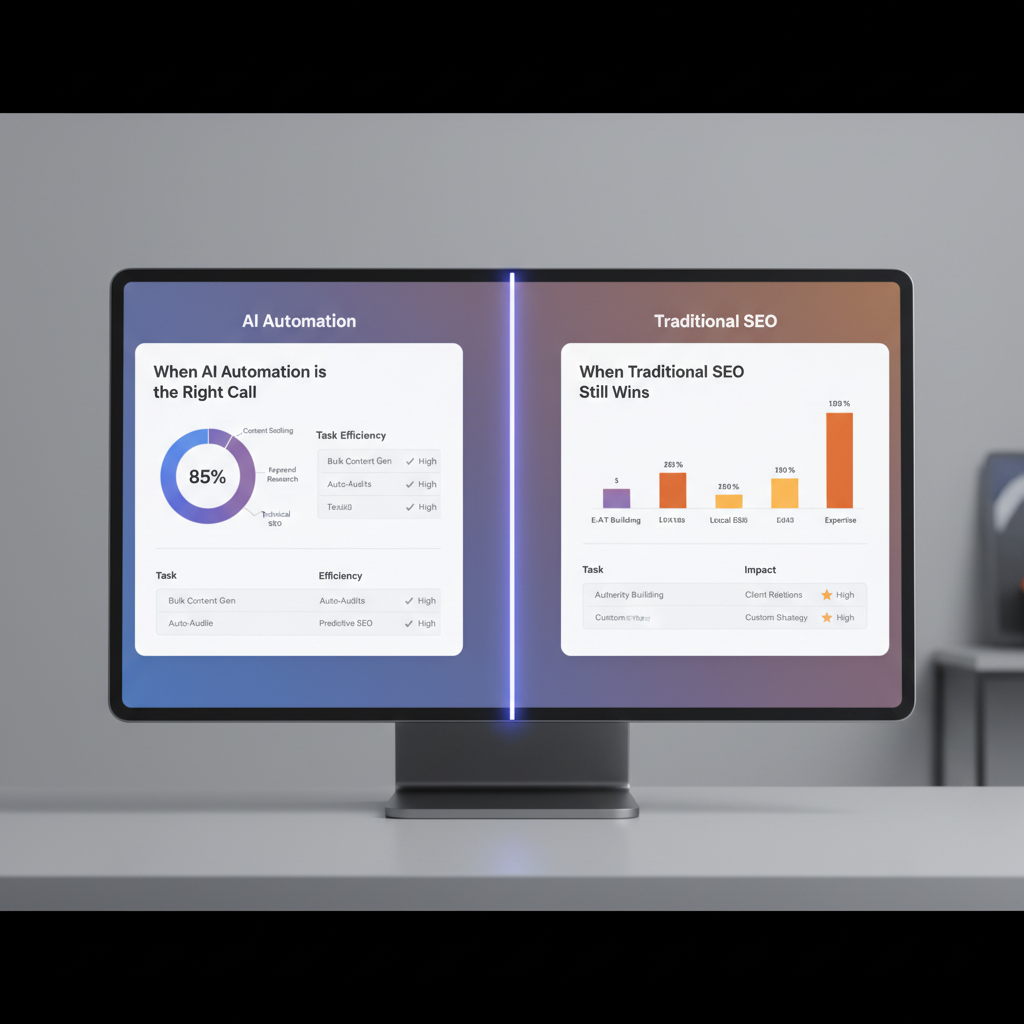
Pick based on what you’re actually trying to do, not on which option sounds fancier. An ai seo agency wins when you need volume: think 200 product pages for a mid-size ecommerce brand that needs to get indexed and ranked before the next sales season. A traditional shop wins when the win depends on relationships and reputation, not just output.
When AI automation is the right call
If your bottleneck is speed, automation solves it. Tools handle keyword research and placement at a scale no human team can match, drafting outlines, matching search intent, and publishing on a schedule instead of a wishlist. A startup trying to build topical authority in a new category benefits from this more than almost any other business type, because early-stage sites live or die on how fast they can cover ground.
When Traditional SEO still wins
Enterprise brands with legal, compliance, or reputational stakes need something automation can’t fully replicate: judgment. Traditional seo agencies still lead on complex technical SEO migrations, nuanced SERP analysis for competitive terms, and digital PR campaigns that earn backlinks through actual journalist relationships, not scraped contact lists. A finance brand negotiating a feature in the Wall Street Journal isn’t automating that outreach anytime soon.
Same goal, different roads
Both paths chase organic growth, just through different machinery. One leans on software to move fast and cheap. The other leans on people to move carefully and build things that are hard to copy. Neither approach is universally “better.” Agencies that pretend otherwise are usually selling you their own bias, not your best outcome.
Quick head-to-head comparison table
Pick your path based on your budget and how much control you want. An ai seo agency like seobase.co handles the heavy lifting through software, while traditional seo relies on a team of humans to make calls.
| Feature | seobase.co | Traditional SEO |
|---|---|---|
| Monthly Cost | Low, software-based pricing | High, human retainer fees |
| Publishing Speed | Fast, automated output | Slower, manual review cycles |
| Strategy | Algorithmic execution | Custom outreach and planning |
| Link Building | Automated discovery | Manual relationship building |
| Analysis | Real-time data processing | Human-led SERP analysis |
The biggest divide is the price tag. You pay for a subscription with an ai seo agency, but a human agency charges for hours spent on backlinks and manual keyword hunting. That cost gap is huge.
Speed is the other major tradeoff. Software can push out optimized pages in minutes. A human team might take weeks to finalize a content calendar because they have to research and write every word by hand.
Depth is where the humans usually win. A person can spot a nuanced trend in search results that a bot misses. They handle complex technical seo issues, like messy server redirects, that require a developer’s touch rather than a prompt. Choose the bot for scale and the human for precision.
Pricing models and retainer economics

Retainer vs. software costs
Traditional SEO usually costs between $2,000 and $20,000 per month. You pay for human hours spent on manual keyword research and chasing backlinks. These high fees cover the time a specialist spends on SERP analysis or fixing complex technical errors in your code. It is a labor heavy model.
AI SEO shifts the cost from people to platforms. Tools like 2026 Ranked typically price their software between $500 and $2,000 monthly. You trade a massive monthly bill for a lean subscription. This allows you to automate keyword placement and content updates without hiring a full agency team.
The margin gap
The real difference shows up in your conversion data. AI driven strategies hit a 14.6% conversion rate. Traditional methods often lag at 1.7%. That gap happens because AI can optimize for intent at a scale humans cannot match.
The math is simple. You spend less on the monthly tool and get a higher return on the traffic you attract.
| Model | Monthly Cost | Primary Driver | Conversion Rate |
|---|---|---|---|
| Traditional SEO | $2,000 to $20,000 | Manual Labor | 1.7% |
| AI SEO | $500 to $2,000 | Software Automation | 14.6% |
Switching to an AI model cuts your overhead while boosting your lead flow. It turns a volatile service expense into a predictable software cost.
Handling technical audits and code fixes
AI platforms handle technical seo automation by identifying and fixing errors in real time. They use automated code remediation to rewrite broken tags or fix schema errors without a human ever touching the codebase. These tools treat a site like a living organism. They spot a 404 error and trigger a self healing fix immediately.
Traditional agencies work differently. They run a crawl, export a spreadsheet, and send a ticket to a developer. This manual handoff creates a lag. A critical redirect error might sit in a Jira queue for two weeks before a dev finds time to deploy the fix.
Continuous monitoring vs. scheduled audits
Complex technical seo is too volatile for a quarterly checkup. A single plugin update can break your pagination or mess up your canonical tags across 10,000 pages. Software handles this natively by scanning for changes every few minutes.
You can keep a closer eye on these shifts by using Google Search Console Monitoring for AI-Published SEO Content to catch crawl errors the moment they spike.
| Feature | AI Platforms | Human Agencies |
|---|---|---|
| Fix Speed | Instant / Real-time | Scheduled Sprints |
| Workflow | Self-healing code | Manual tickets |
| Audit Cycle | Continuous | Monthly or Quarterly |
| Risk | Logic errors | Human oversight |
Automation wins on speed. While a human expert is better for high level strategy, software is the only way to maintain a clean technical foundation at scale. It stops small bugs from becoming site wide disasters.
Content velocity and generative engine optimization
Content velocity is no longer about just hitting a publishing quota. It is about how fast you can feed a generative engine the structured data it needs to cite you. The market for generative engine optimization is scaling fast and is projected to reach billions by 2034.
Winning the AI overview
You cannot ignore the traditional search results. Over 92% of AI overview results pull from the top 10 organic listings. This means your first step is still winning the standard search page.
Once you rank, you need entity-first ai overview optimisation. This approach focuses on defining your brand as a clear entity (a person, place, or thing) rather than just a collection of keywords. You do this by scaling structured content and using clear, factual statements that an LLM can easily parse.
Scaling with precision
Rapid scaling fails if you just pump out generic text. You need a system for geo research and thought leadership to identify the specific gaps where AI engines lack a definitive answer.
Use these three tactics to move faster:
- Synthetic citation tracking: Monitor which sources the AI cites for your target topics to see what format they use.
- Structured briefs: Use a Free Content Brief Generator for SEO to ensure every new piece of content satisfies the entity requirements.
- Fact-density: Replace vague adjectives with hard numbers and named examples.
High velocity works when you combine speed with a technical setup that AI can read. If your content is a wall of text, the engine will skip it. If it is a series of clear, verified claims, you get the citation. That is how you win the overview.
Which approach should you choose for your business?

Pick automation if your biggest problem is a lack of pages. Software wins when you need to turn 10 target keywords into 100 landing pages by Tuesday. It handles the heavy lifting of finding where to put words and analyzing search results at a scale no human can match.
Go with an agency for high stakes
Hire an ai seo agency when you need a strategy that involves human relationships. Software cannot call a journalist to secure a high authority link or navigate a complex corporate brand guide. Use traditional seo firms for digital PR or when your site has deep technical flaws that require a developer to fix.
The best ai seo agencies combine these worlds. They use tools for the grunt work but keep a human in the loop for executive decisions. This is the right move for a $10M+ ARR company that cannot afford a single hallucinated fact in their content.
Check your tech stack first
Before signing a long retainer, look at your internal team. If you have a dedicated engineering squad, you can likely implement an automation tool in house. Agencies often charge a premium for the same software you could license yourself.
| Need | Best Choice | Why |
|---|---|---|
| Massive Volume | Automation | Speed and scale |
| Brand Authority | Agency | Bespoke PR and links |
| Technical Fixes | Agency | Expert manual audits |
| Quick Wins | Automation | Fast deployment |
Choose based on your bottleneck. If you have a great strategy but no content, buy the software. If you have a great site but no one knows you exist, hire the experts.
The hybrid automation alternative with seobase
So what do you do when a full seo agency retainer feels like overkill, but spreadsheets and fifteen browser tabs feel like a part-time job? That’s the gap Seobase was built for. It’s an ai seo platform that handles the grind between “I have a keyword” and “the post is live,” without the agency invoice.
What it actually automates
Picture a solo marketer trying to grow an organic blog. Normally that means pulling search volume data, checking what already ranks, sketching a brief, writing, formatting for the CMS, and hitting publish. That’s five separate tools and a few wasted hours per article.
Seobase compresses that into one flow. Its keyword research module surfaces volume, difficulty, and intent in a single pass. Then it runs a SERP-style breakdown of the top-ranking pages, so you know what headings and subtopics you actually need to compete, instead of guessing at what a page needs to rank. From there it drafts a content brief with keyword placement baked in, and can push the finished piece straight to your CMS.
Why this beats the two usual options
Hiring an agency to handle technical fixes, backlink outreach, and content calendars can run thousands per month. Doing it all by hand means keyword research and page-by-page optimization eat your week. Seobase sits in the middle: it won’t rebuild a broken site architecture or negotiate backlinks for you, but it kills the repetitive research-and-formatting work that eats most of a solo marketer’s time.
Who stays in control
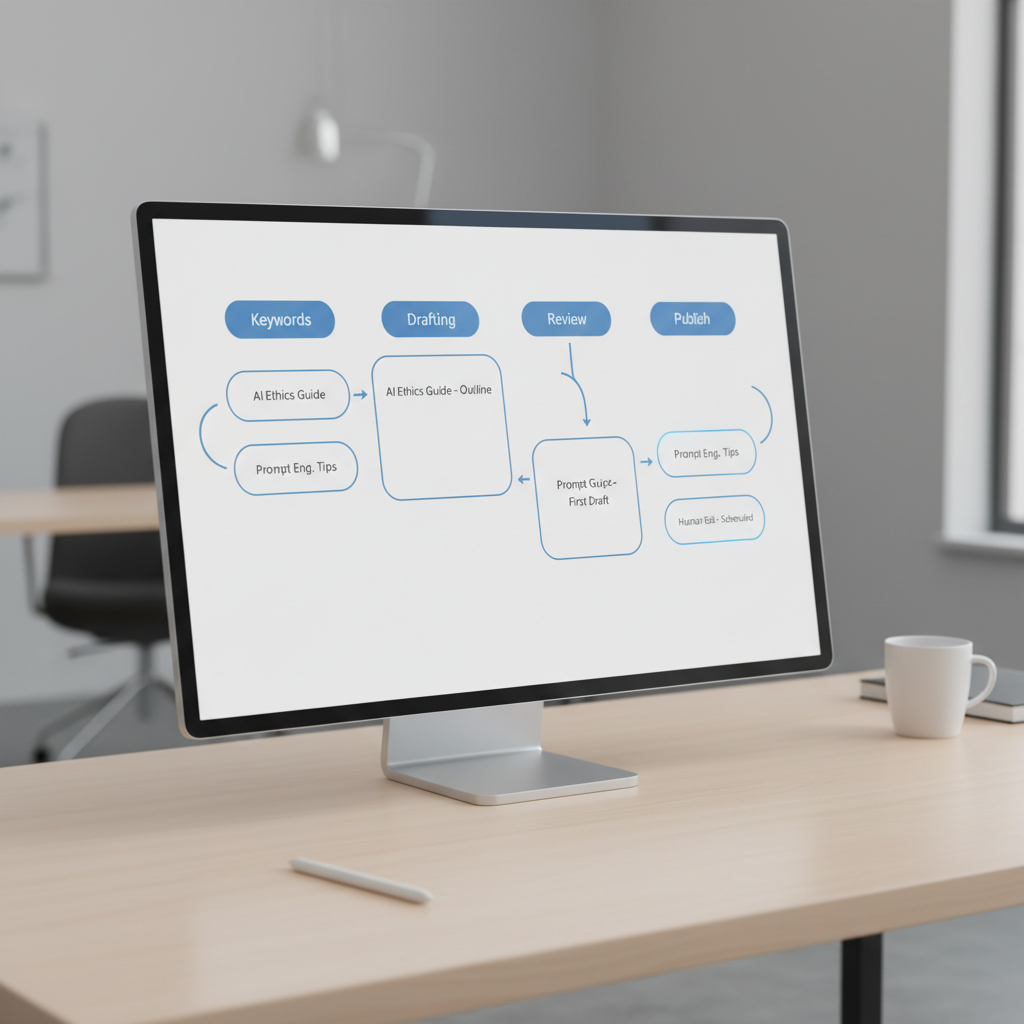
Nothing publishes without a human okay. You review every brief, edit every draft, approve every CMS push. The platform just removes the copy-paste tax between strategy and execution, so a two-person team can keep pace with content output that used to need a bigger budget.
Summary of the organic search landscape
Here’s the direct answer: pick AI SEO if you need volume and speed, keep traditional SEO in the mix if your growth depends on relationships nobody can automate yet.
That’s the whole split, once you strip away the hype. AI tools have gotten scary good at keyword research and placement, at running fast serp analysis across hundreds of terms, and at drafting pages that satisfy search intent without a writer spending three days on it. Say you need 50 product pages optimized before a seasonal launch. An AI-assisted workflow can draft, structure, and internally link those pages in a fraction of the time a manual process takes, and at a much lower cost per page.
Where agencies still earn their fee
Complex technical SEO work, like untangling a botched site migration or fixing crawl budget waste on a 200,000-page site, still needs a human who understands server logs and JavaScript rendering quirks. Backlink building through actual relationships (podcast swaps, HARO-style press mentions, conference connections) is still a people business. No model is cold-emailing an editor and building trust over three follow-up calls.
Your next move
Look at your content calendar and ask one question: what’s your current output capacity, and where’s the bottleneck? If you’re stuck at a handful of pages a month because manual keyword research and writing eat your time, automate that layer first. If your bottleneck is earning links or navigating a technical mess, that’s still agency territory going into 2026 ranked search environments. Audit your capacity today, then assign the work to whichever side actually solves your bottleneck.
Frequently asked questions
What core metric differentiates Traditional SEO agencies from AI SEO agencies?
Traditional SEO measures keyword rank and organic traffic, whereas AI SEO measures entity citations, brand inclusion in Google AI Overviews, and LLM source references.
How do AI platforms impact technical SEO agency services?
Automated platforms and no-code tools can detect, prioritize, and automatically fix code issues, reducing the billable hours traditionally spent by technical SEOs.
What is the typical cost difference between AI-driven platforms and Traditional SEO agency retainers?
Traditional retainers range from $2,000 to $20,000 monthly, while AI software platforms or automated agencies can offer solutions between $500 and $2,000 monthly.
Does Traditional SEO still matter if companies hire AI SEO agencies?
Over 92% of AI Overview results still pull from top 10 organic listings, making traditional rankings the essential entry ticket for AI citation.
What is generative engine optimization (geo) and how do agencies charge for it?
GEO focuses on optimizing content for AI-generated answers and LLM citations. Agencies charge either via expanded retainers or software licensing fees as the market scales toward 2034.
Are Traditional SEO agencies becoming obsolete due to AI platforms?
Not entirely, but their operational models are shifting. Routine tasks are being automated, forcing agencies to pivot toward high-level strategy and complex digital PR.
Related reading
Put this on autopilot
Seobase runs the whole loop for you: it finds the keywords worth ranking for, writes and publishes the articles, and reports back from Search Console on what actually moved.
Start a free Seobase workflowIn this guide
- The verdict: speed versus custom strategy
- Quick head-to-head comparison table
- Pricing models and retainer economics
- Handling technical audits and code fixes
- Content velocity and generative engine optimization
- Which approach should you choose for your business?
- The hybrid automation alternative with seobase
- Summary of the organic search landscape
- Frequently asked questions