Long Tail Pro vs Ahrefs: why LTP shut down what to choose in 2026
If you built keyword lists with Long Tail Pro back when it was the go-to app for finding low-competition phrases, you’ve probably noticed the software feels stuck in 2015. That’s the real story behind long tail pro vs Ahrefs: one tool stayed a niche keyword finder, the other grew into a full SEO platform with its own crawler, link index, and rank tracker.

Here’s the direct answer: Ahrefs wins for most people in 2026 because it pairs keyword research with site audits, backlink data, and competitor tracking in one place, while Long Tail Pro still only estimates search volume and keyword difficulty for long tail keywords, nothing more. If your workflow stops at finding a long tail keyword and never touches technical SEO or link building, the older tool can still get by. But most former LTP users outgrow that ceiling fast, usually right around the point they need to explain a traffic drop or check who’s linking to a competitor’s page.
The rest of this guide breaks down pricing, keyword database size, and how each tool handles actual long tail research, so you can decide with real numbers instead of nostalgia for the app that used to sit in your browser tab.
TL;DR: Long Tail Pro permanently shut down on June 5, 2024, making direct feature comparisons obsolete. While Ahrefs serves as a powerful enterprise replacement with superior data depth, budget-conscious users often prefer lightweight alternatives or automation platforms like Seobase.
The verdict up front: who each platform is for
If you need serious data firepower: Ahrefs
Ahrefs is built for people who live inside backlink profiles, competitor gap analysis, and rank tracking across hundreds of domains. Agencies and in-house SEOs who need to defend strategy with hard numbers reach for it because the crawl data and site audit tools go deep enough to catch technical issues a lighter tool would miss entirely. If your job depends on proving ROI to a client or a boss, this is the tier you need to play in.
If you were on Long Tail Pro: time to move on
Long Tail Pro built its reputation on helping bloggers find low-competition phrases, the kind of specific, multi-word searches (think “best budget tripod for birdwatching” rather than just “tripod”) that convert better because the searcher already knows what they want. That’s the core idea behind long tail keywords: lower search volume, but much clearer intent.
Here’s the problem: LTP has permanently shut down. Anyone still running it for keyword research is working off a dead product with no updates, no support, and no new data feed. There’s no “wait it out” option here. If you were comparing long tail pro vs ahrefs and leaning toward the familiar, older tool out of habit, that choice has been made for you.
If you’re a solo blogger on a budget
Not everyone needs Ahrefs’ firehose of link and traffic data. A single-site blogger chasing a handful of long tail keyword ideas a month doesn’t need enterprise crawl infrastructure. Lighter tools built specifically for tail keywords and simple keyword research workflows get the job done for less money and less learning curve.
The honest split: Ahrefs for depth and scale, a lightweight tool for a lean content calendar, and nothing for anyone still clinging to the old tail pro workflow.
Head-to-head comparison of features and pricing
Line them up side by side and the split becomes obvious fast: one tool built a research empire, the other stayed small and specialized until it couldn’t keep the lights on.
Pricing: tiers vs. a single flat rate
Ahrefs structures its plans in a ladder. You start on a lighter tier built for solo bloggers and small sites, then climb through mid-tier plans meant for agencies, up to an enterprise package with custom limits, seat counts, and API access. That range lets a freelancer and a 200-person marketing team both use the same platform, just at different scale.
Long Tail Pro never tried to be that. It sold as a single affordable tool aimed at one job: finding long tail keywords with decent search volume and low competition. No enterprise tier, no agency ladder. Just a keyword suggestion engine at a price a solo blogger could justify.
Feature depth: suggestions vs. infrastructure
Picture someone searching “best waterproof hiking boots for wide feet.” That’s a classic long tail keyword, low volume, high buying intent, exactly the kind of tail keywords Long Tail Pro was built to surface. Its feature set stopped there: keyword suggestions, basic competition scoring, and rank tracking.
Ahrefs covers that same ground and then keeps going. Its keyword research module handles the same long-tail hunting, but it sits alongside a backlink index spanning billions of crawled pages, site audit tools, and content gap analysis. That’s the real gap in the long tail pro vs ahrefs debate: one tool answered a single question, the other built an entire research stack around it.
|
Dimension |
Long Tail Pro |
Ahrefs |
|---|---|---|
|
Pricing structure |
One flat tier |
Starter through enterprise |
|
Core focus |
Long tail keyword discovery |
Full-stack SEO research |
|
Backlink data |
None |
Massive, continuously crawled index |
|
Status |
Shut down |
Active, at ahrefs.com |
What happened to Long Tail Pro and why it matters

Long Tail Pro shut down permanently on June 5, 2024. The software stopped functioning, and users lost access to their accounts and any historical keyword lists saved within the platform.
The collapse happened because Google tightened how third party tools access search data. Legacy software that relied on old scraping methods or restrictive APIs could no longer pull accurate search volume or ranking data. When the data flow stopped, the tool became a shell.
Why the shutdown matters
The sudden exit of LTP left a gap for people who preferred a dedicated desktop app over a browser based subscription. Most users had to migrate their keyword research workflows to modern platforms like Ahrefs.
This shift changed how people find long tail keywords. Old tools often focused on raw lists of low competition phrases. Modern alternatives integrate these “tail” phrases with actual competitor backlinks and traffic estimates.
The loss of data was the biggest hit. Imagine a site owner who spent three years building a categorized library of thousands of niche phrases. Because the shutdown was absolute, those curated lists vanished. You cannot simply export data from a dead server.
Choosing a replacement
If you are moving from Long Tail Pro to Ahrefs, you will notice a difference in how you find low hanging fruit. Instead of just filtering by a volume number, you now use the Keywords Explorer to see exactly which pages already rank for those specific phrases.
It is a more robust way to work. You get the same specific, multi word queries but with the added context of how many sites are actually competing for them. The old way was a guessing game based on volume. The new way is based on visible evidence.
Keyword data depth and difficulty metrics
Ahrefs calculates difficulty by analyzing the backlink profiles of the pages currently holding the top 10 spots. If those sites have thousands of referring domains, the score climbs. This approach tells you exactly how much “link juice” you need to compete. It is a practical metric because it mirrors the actual barrier to entry.
Long Tail Pro uses a different logic based on legacy competitiveness metrics. It focuses more on the number of sites ranking for a specific phrase rather than the raw power of those sites. This makes it a decent tool for finding low competition niches, but it lacks the granular link data needed for high stakes strategy.
Moving beyond single keywords
Targeting one specific phrase is a losing game. You should use parent topic clustering to group related queries under one main pillar. For example, instead of writing separate posts for “best hiking boots,” “waterproof hiking boots,” and “lightweight hiking boots,” you build one comprehensive guide. This captures a wider range of search intent and prevents you from competing against yourself.
The difference between these tools comes down to how they handle the “tail” of search queries.
-
Ahrefs provides the depth to see if a high volume term is actually reachable.
-
Long Tail Pro helps you spot a high volume of low competition phrases quickly.
Pick Ahrefs if you need to map out a backlink gap analysis. Use Long Tail Pro if you are just brainstorming a list of long tail keywords for a new niche. Most pros use the former because knowing the domain rating of a competitor is more useful than a generic competitiveness percentage. That data prevents you from wasting months on a keyword you can’t possibly rank for.
Backlink index capacity and competitive metrics
Ahrefs wins on raw data because it maintains a massive historical backlink index. This allows you to see who linked to a page years ago, even if that link is now gone. You can use Site Explorer to map out a competitor’s entire link profile and identify their most powerful referring domains.
Long Tail Pro lacks these deep monitoring capabilities. It focuses on keyword tracking rather than the infrastructure of the web. If you need to know exactly why a competitor is outranking you on a specific phrase, Long Tail Pro cannot show you the specific backlinks driving that authority.
Gauging competitor traffic
Estimating how much traffic a rival gets requires a tool that analyzes the entire site, not just a few keywords. Ahrefs provides competitor organic traffic estimation by combining search volume data with ranking positions. This gives you a ballpark figure of their monthly visitors.
Long Tail Pro cannot perform this site-wide analysis. It tells you where you rank for a specific long tail keyword, but it won’t tell you the total volume of visitors hitting a competitor’s homepage.
To get the most out of these numbers, look at the click-through rate (CTR). Search volume is a vanity metric if the SERP is crowded with ads or featured snippets. High CTR metrics show the true organic search potential of a term.
|
Feature |
Ahrefs |
Long Tail Pro |
|---|---|---|
|
Backlink Index |
Comprehensive historical data |
None |
|
Traffic Estimation |
Site-wide organic estimates |
Keyword-specific rank |
|
Link Analysis |
Site Explorer for audit |
Basic rank tracking |
Once you identify the keywords driving the most traffic, your next step is optimizing the content to capture those clicks. Use a free headline checker to ensure your titles actually entice users to click. Good data is useless if your headline is boring.
Skip the manual work. Seobase is an SEO automation platform for creating and publishing search-focused content. Try Seobase →
Cost-benefit analysis and pricing models
Ahrefs is the better investment because it provides a complete marketing suite rather than a single feature. While Long Tail Pro once attracted users with cheap, niche tools for finding specific phrases, that service is no longer an option. You cannot buy a tool that has closed its doors.
Pricing and plans
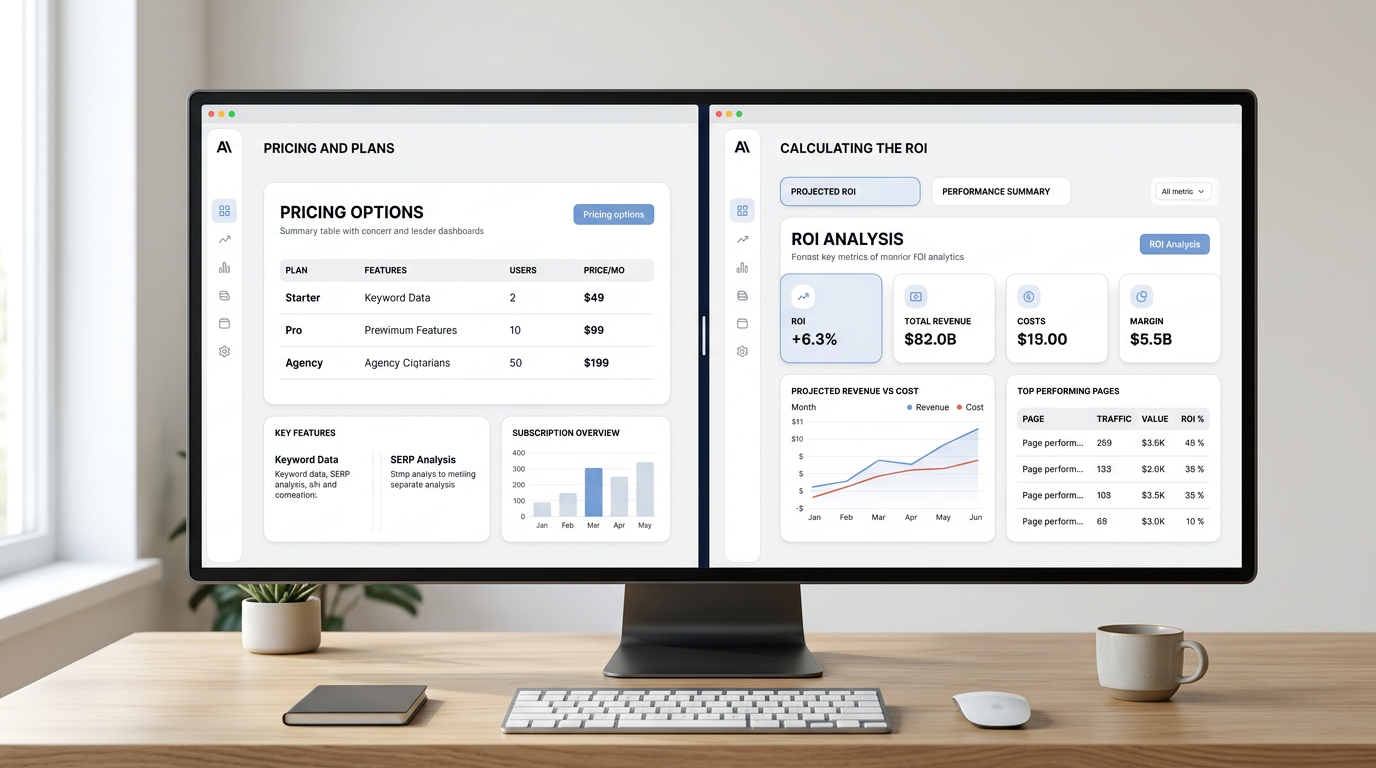
The Ahrefs starter plan begins at $29/month. This entry point lets you dig into search volume and competition without a massive upfront cost, though you will deal with strict credit limits. If you hit those limits while auditing a large site, you have to buy more credits or wait for the next month.
For professional teams, Ahrefs Lite offers the power needed to manage multiple domains. It moves you past the basic constraints and gives you the depth required for high stakes keyword research.
Calculating the ROI
Compare the cost to the value of a single high converting phrase. A single long tail keyword with low competition can drive a steady stream of leads that pays for the $29/month subscription in one day.
|
Plan |
Starting Price |
Primary Use Case |
|---|---|---|
|
Starter |
$29/month |
Solo bloggers and small sites |
|
Lite |
Varies |
Professional SEO teams |
|
Long Tail Pro |
N/A |
Defunct / Closed |
The math is simple. Paying for a robust tool that tracks your actual rankings and backlinks is more productive than hunting for cheap alternatives that lack data depth. You get a reliable index and a set of tools that actually move your traffic numbers. That stability makes the monthly fee a predictable business expense.
A smarter alternative for automated content publishing
seobase replaces the manual chain of jumping between a keyword tool, a spreadsheet, and a CMS. Most workflows start with ahrefs to find high volume terms, then move to a separate AI writer, and end with a manual copy paste into a website. That process breaks when you try to scale.
Automate the planning phase
Instead of manually filtering lists for low competition, seobase handles the keyword research and builds your content calendar automatically. It identifies those specific, multi word phrases that users actually type into search bars. These niche queries often have lower search volume but convert better because the intent is clearer.
You get a roadmap of topics without spending hours in a keyword explorer. The system finds the gaps and schedules the production. It removes the guesswork from deciding what to write next.
Direct publishing pipeline
The real bottleneck is the “last mile” of publishing. seobase connects directly to your site so you can push content without leaving the app.
-
WordPress: Push posts directly to your draft or published folders.
-
Webflow: Sync content to your CMS collections.
-
Shopify: Update product descriptions or blog posts instantly.
This integration cuts the manual workload. You move from a raw keyword idea to a live URL in a few clicks.
A leaner SEO stack
Traditional setups often require a mix of Long Tail Pro for niche discovery and ahrefs for broad analysis. Running multiple subscriptions and exporting CSVs is a chore. seobase consolidates this by integrating the research, the AI writing, and the distribution into one loop. You stop managing tools and start managing a content engine. It is a simpler way to grow organic traffic.
Summary of your best tool choices moving forward
If you’re still running Long Tail Pro on a desktop install from a decade ago, that’s your first fix. The tool built its name on keyword difficulty scores and bulk keyword exports, but development stalled and support tickets go unanswered for weeks. Move your workflow to something actively maintained, or you’re optimizing for a search landscape that shifted years ago without you.
For anyone doing serious link audits, Ahrefs is the call. Its Site Explorer shows referring domains, anchor text distribution, and lost/new backlinks in one dashboard, something Long Tail Pro never attempted. If your work involves untangling why a competitor outranks you on a long tail keyword with barely any search volume, Ahrefs’ backlink gap tool answers that faster than manual spreadsheet comparisons ever will.
Not everyone needs that depth, though. If you’re just brainstorming a handful of long tail keywords for a blog post, a lighter tool like Google Keyword Planner or AnswerThePublic gets you there without a monthly invoice. Save Ahrefs for when you actually need to reverse-engineer a competitor’s link profile, not for casual topic ideation.
Whichever platform you pick, plug it into automation. Tools like Zapier or built-in CMS scheduling (WordPress’s native publish-date queue, for example) let you push keyword research straight into a content calendar without retyping data into three different spreadsheets. That’s the difference between research sitting in a tab you forget about and research that actually turns into published pages.
TL;DR
-
Drop legacy software like Long Tail Pro if it’s no longer updated.
-
Pick Ahrefs for backlink-heavy analysis, a lighter tool for quick keyword checks.
-
Connect your research tool to an automation workflow so content moves from idea to published post without manual handoffs.
Next step: audit your current toolkit this week and cut anything that hasn’t shipped a real update in the last year.
Frequently asked questions
Is Long Tail Pro still working in 2026?
No, Long Tail Pro is not working in 2026. The platform shut down permanently on June 5, 2024, and its former domain no longer hosts the keyword research software. Active users must migrate their campaigns and keyword lists to alternative SEO platforms.
What happened to Long Tail Pro?
Long Tail Pro shut down permanently due to changing market conditions, increasing maintenance costs, and ongoing restrictions on Google data access like Keyword Planner APIs. The sudden closure left users without access to their saved keyword campaigns.
Can Ahrefs completely replace Long Tail Pro?
Yes, Ahrefs can handle every task that Long Tail Pro performed, including finding long-tail keyword variations and checking keyword difficulty. However, Ahrefs offers a much deeper backlink index and a higher price point than the legacy tool.
What is the equivalent of Long Tail Pro’s KC score in Ahrefs?
Ahrefs uses Keyword Difficulty (KD) instead of the old KC Score. While KC ranged from 0 to 100 based on Google Keyword Planner competition, Ahrefs KD calculates difficulty by analyzing the number of referring domains pointing to current top-ranking pages.
What are the best alternatives to Long Tail Pro?
The best lightweight alternatives for former Long Tail Pro users include Mangools KWFinder, Keysearch, and ChatSEO. These tools offer budget-friendly pricing and straightforward keyword research interfaces without the enterprise complexity of larger suites.
How much does Ahrefs cost per month?
Ahrefs pricing starts around $29 per month for a credit-limited Starter plan, while higher tiers like Lite and Standard scale up for professional SEO agencies. This represents a higher investment compared to legacy niche applications.
Is Long Tail Pro still available?
Long Tail Pro is no longer available. The application was permanently retired in mid-2024, and the domain now points to an unrelated insurance and claims website.
What are the best lightweight alternatives to Ahrefs for former LTP users?
Former LTP users looking for simplicity and lower cost often choose Mangools KWFinder or Keysearch for keyword research, paired with automated publishing platforms like Seobase to handle content creation.
Related reading
Put this on autopilot
Seobase runs the whole loop for you: it finds the keywords worth ranking for, writes and publishes the articles, and reports back from Search Console on what actually moved.
Start a free Seobase workflowIn this guide
- The verdict up front: who each platform is for
- Head-to-head comparison of features and pricing
- What happened to Long Tail Pro and why it matters
- Keyword data depth and difficulty metrics
- Backlink index capacity and competitive metrics
- Cost-benefit analysis and pricing models
- A smarter alternative for automated content publishing
- Summary of your best tool choices moving forward
- Frequently asked questions